
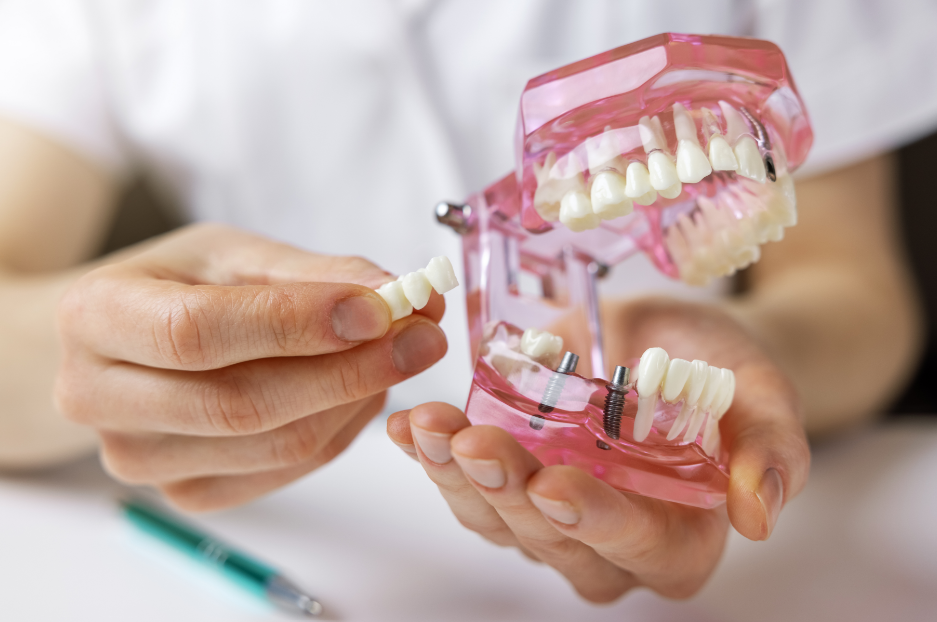
Dental bridges are a reliable way to replace missing teeth, restoring both function and appearance. With proper care, a dental bridge can last 10 to 15 years or longer. However, like any dental restoration, bridges are not indestructible. Understanding what can cause a dental bridge to fail can help you protect your investment and avoid unexpected complications.
Tooth Decay Beneath the Bridge
One of the most common reasons a dental bridge fails is decay in the supporting teeth. A bridge relies on healthy adjacent teeth for stability. If plaque and bacteria accumulate around the margins of the bridge, decay can develop beneath the crowns without being immediately noticeable.
Good oral hygiene is essential, especially flossing around and under the bridge using specialized flossing tools or water flossers to keep bacteria from building up in hard-to-reach areas.
Gum Disease and Bone Loss
Healthy gums and bone are critical for supporting the teeth that anchor a dental bridge. If gum disease develops, it can lead to inflammation, infection, and eventual bone loss around the supporting teeth. As the foundation weakens, the bridge may loosen or fail altogether.
Regular dental visits and professional cleanings help catch gum disease early, reducing the risk of long-term damage to your restoration.
Normal Wear and Tear Over Time
Dental bridges are designed to withstand daily chewing forces, but years of use can take a toll. Constant pressure from biting and chewing, especially on hard or sticky foods, can weaken the materials or cause fractures.
Teeth grinding or clenching can accelerate wear, placing excessive stress on the bridge and its supporting teeth. Over time, this strain can compromise the stability of the restoration.
Poor Oral Hygiene Habits
Even the highest-quality dental bridge can fail without proper care. Inadequate brushing and flossing allow plaque to accumulate, increasing the risk of decay and gum disease around the bridge.
Skipping routine dental checkups can also allow small issues to go unnoticed until they become larger problems. Consistent daily care and professional monitoring are key to extending the life of a dental bridge.
Improper Fit or Bite Issues
A dental bridge must fit precisely to function properly. If a bridge does not fit correctly or if your bite changes over time, uneven pressure can develop. This can lead to discomfort, damage to the supporting teeth, or loosening of the bridge.
Bite issues may also arise after tooth movement or dental work elsewhere in the mouth, making periodic evaluations important even years after placement.
Protecting Your Dental Bridge
While some factors are unavoidable, many causes of dental bridge failure can be prevented. Maintaining good oral hygiene, attending regular dental visits, avoiding harmful habits, and addressing grinding or clenching early can significantly extend the lifespan of your bridge.
With the right care and attention, your dental bridge can continue to function comfortably and effectively for many years.
About the Practice
Radiant Dental offers comprehensive restorative dental care for patients with missing teeth, including dental bridges designed to restore function and appearance. Dr. Saywa focuses on personalized treatment plans, preventive care, and long-term maintenance to help patients protect their restorations. Come see us to learn more about options for replacing missing teeth.
Call us at (248) 855-4850 or request an appointment online.
