
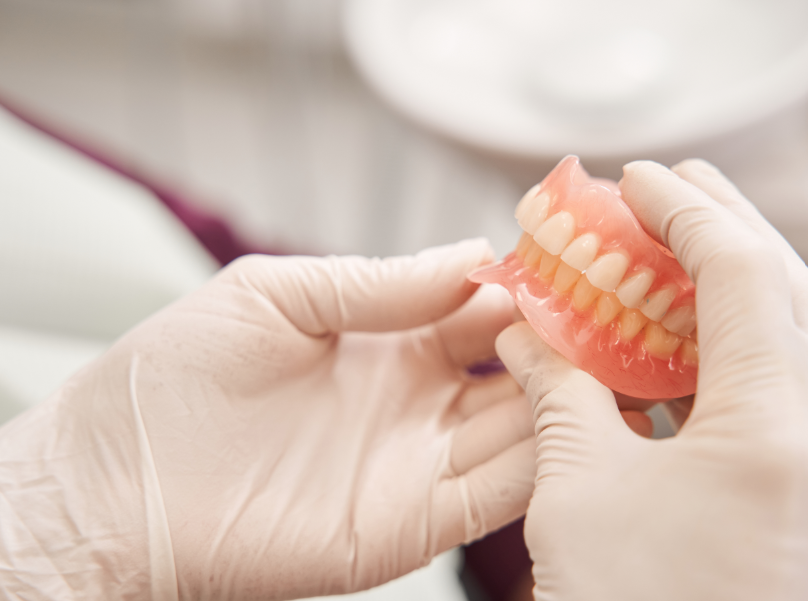
Getting used to dentures can take some time, especially when you’re learning how to keep them comfortable and secure throughout the day. Denture adhesive can provide some extra stability, but using it correctly is important. Too much adhesive can be messy, while too little may not provide the hold you’re looking for.
So, how do you use denture adhesive? The process is fairly simple once you know what to look for, from preparing your dentures to removing leftover adhesive at the end of the day.
Do You Need Denture Adhesive?
Denture adhesive isn’t necessarily something every denture wearer needs. Well-fitting dentures should generally stay securely in place without adhesive. However, adhesive can sometimes provide additional stability, particularly when eating or speaking.
You may want to talk with your dentist about adhesive if your dentures frequently move, feel loose, or make you uncomfortable when you’re talking or eating. Your dentist can also check whether your dentures fit properly. If your dentures have become loose over time, adhesive may provide temporary assistance, but a professional adjustment or replacement may ultimately be necessary.
Prepare Your Dentures
Before applying adhesive, start with clean dentures. Remove any old adhesive and rinse the restoration thoroughly. Make sure your dentures are clean and follow the product’s instructions regarding whether they should be wet or dry before application.
It’s also important to clean your mouth regularly. Even if you wear full dentures, gently brushing your gums, tongue, and the roof of your mouth can help keep your mouth fresh and healthy.
Apply the Right Amount
Denture adhesive comes in several forms, including creams, powders, and adhesive strips. The application process can vary depending on the product, so always follow the manufacturer’s instructions.
If you’re using adhesive cream, apply a small amount to the denture in several spots rather than covering the entire surface. When you put the denture in place, press it firmly and evenly for a few moments.
If adhesive squeezes out around the edges, you’ve probably used too much. More adhesive doesn’t necessarily mean a stronger hold.
Know When to Remove Your Dentures
It’s generally a good idea to remove your dentures at night unless your dentist has specifically instructed you otherwise. Removing them gives your gums and other oral tissues a chance to rest.
When removing your dentures, gently loosen them rather than pulling aggressively. Afterward, clean both your mouth and your dentures to remove adhesive and accumulated debris.
How to Remove Denture Adhesive
Removing leftover adhesive starts with gently cleaning your dentures. Rinse them and use a denture brush or soft toothbrush to remove residue. Avoid using hot water, which can potentially distort some denture materials.
For adhesive remaining in your mouth, gently brush your gums, palate, and tongue with a soft-bristled toothbrush. Rinsing with warm water can also help loosen residue.
If you consistently have a difficult time removing adhesive, ask your dentist whether you’re using too much or whether another type of adhesive may be more appropriate.
When to Talk to Your Dentist
Denture adhesive can be useful, but it shouldn’t be used to compensate for dentures that no longer fit properly. If your dentures are consistently slipping, causing sore spots, or making it difficult to eat or speak, schedule an appointment.
Your dentist can determine whether your dentures need an adjustment, repair, replacement, or simply a different approach to adhesive.
With the right technique and a little practice, denture adhesive can become an easy addition to your daily routine.
About the Practice
Radiant Dental provides comprehensive dental care focused on helping patients maintain comfortable, healthy smiles. The practice offers denture treatment for patients who need to replace missing teeth and restore everyday oral function. Dr. Saywa takes a personalized approach to care, helping patients understand their options and providing guidance for maintaining their restorations.
Call us at (248) 855-4850 or schedule your appointment online.
