
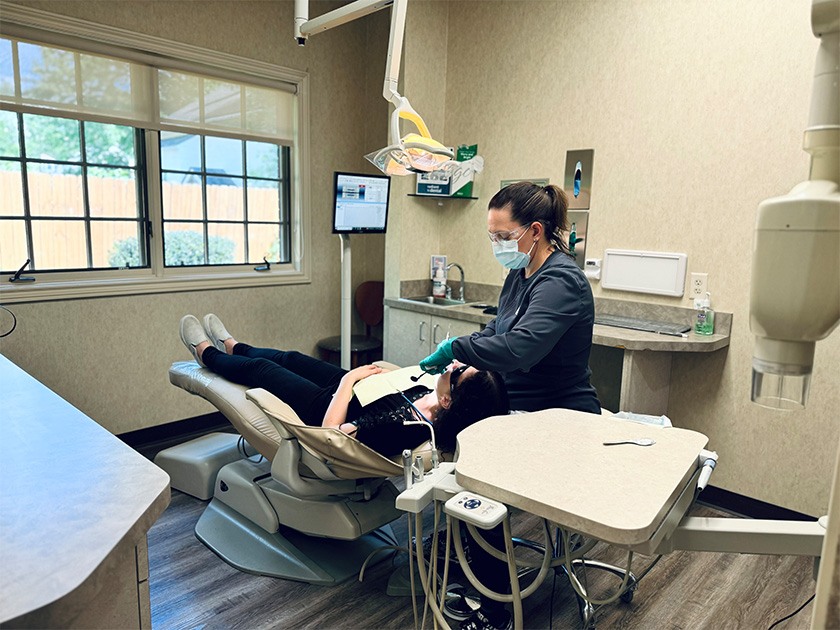

The American Dental Association recommends seeing your dentist every six months for a routine checkup to monitor your oral health and professionally clean your teeth. This allows your provider to catch and treat any areas of concern, like thinning enamel or swollen gums, before they become problematic.
However, many patients are surprised when their oral healthcare provider takes their blood pressure during these routine appointments. Continue reading to learn more about why this is sometimes included so you know what to expect from your next standard visit!
Why Does My Dentist Take My Blood Pressure?
Many patients expect their primary care physician to take their blood pressure and other health statistics when they arrive, but are somewhat surprised when their dentist does the same. You might think it’s unnecessary, but the truth is that your oral and overall well-being depend on each other, and taking your blood pressure helps establish a baseline from which to work. This can build a pattern that alerts your dentist to potential problems when there are changes.
For instance, if you arrive one day for an appointment and your blood pressure is higher than usual, your provider might need to adjust the intended medications or treatment plan to avoid harming your general health.
What Oral Issues Can Affect Blood Pressure?
Everyone’s bodily chemistry is unique, but generally, people have higher blood pressure when they are experiencing heightened stress, pain, or anxiety. That means you might have higher blood pressure if you’ve developed an emergency, such as a toothache, or have a severely damaged or decayed tooth requiring extraction. Then, once the troublesome tooth has been removed, you might experience a drop in blood pressure.
Your dentist will monitor your health to ensure they don’t provide medications or procedures that cause negative interactions that cause your blood pressure to reach dangerous levels.
What Blood Pressure is Considered Too High for Dental Work?
The range for what’s considered “too high” can depend on your individual circumstances, such as your usual blood pressure, the procedures you’re undergoing, and many other health history factors.
With that said, many providers consider high blood pressure to be 140/90. Furthermore, if the top number (systolic) is higher than 140 or the bottom number (diastolic) is higher than 90, you might have high blood pressure regardless of the other number.
If your dentist determines that your blood pressure is too high to undergo the anticipated procedure, you may need to consult your doctor or make other lifestyle changes to get back on track before moving forward with your dental work.
Having an honest conversation with your dentist about your current health conditions can help avoid potential negative impacts on your overall well-being!
Meet the Author
Dr. Reem Saywa has over a decade of experience helping people build and maintain beautiful, healthy smiles. She earned her dental degree from the University of Detroit Mercy Dental School, and today, offers a comprehensive menu of services to meet the needs of patients of all ages. Whether you require a routine checkup and cleaning or a more complex procedure, she’ll take the time to update your medical history to preserve your oral and overall well-being. You can request an appointment on the website or by calling (248) 855-4850.
