
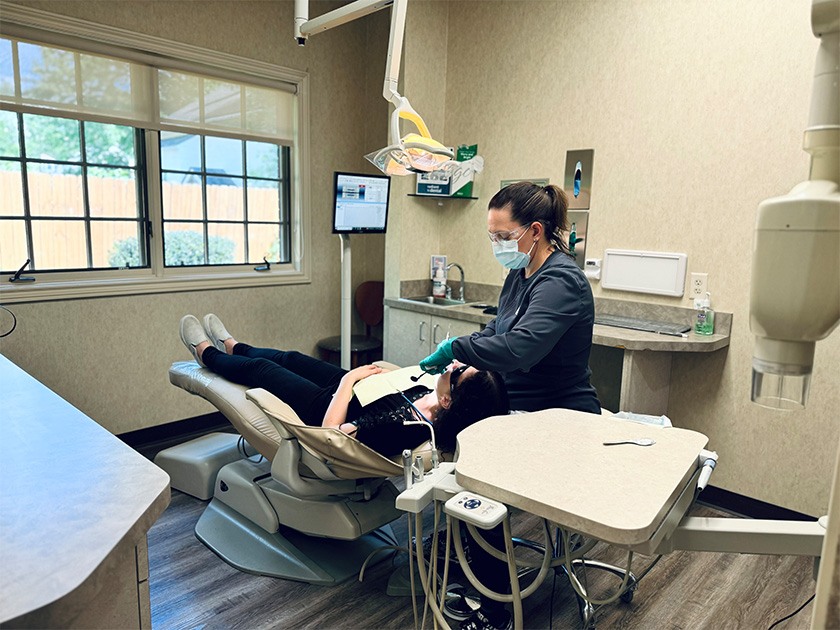

Under normal circumstances, most people can count on their dentist to do everything in their power to protect and preserve their natural teeth and gums. However, if you have a severely damaged or decayed tooth or have developed advanced gum disease that has destabilized one or more teeth, your provider may have no recourse other than to recommend extraction and replacement.
It’s natural to feel a little nervous about your upcoming procedure, but thankfully, this treatment usually helps more than it hurts. Continue reading to learn about 3 benefits of removing a troublesome tooth to help set your mind at ease.
Advantage #1: Pain Relief
You’re not alone if you’re feeling somewhat anxious about your tooth extraction; plenty of people worry that their treatment might hurt. But usually, this procedure alleviates more discomfort than it causes.
For instance, your dentist will likely numb your mouth with a local anesthetic, so you might feel pressure while they work, but not outright discomfort. That means you likely won’t have to worry about potential aches or inflammation until the medication wears off.
Then, it’s normal to feel tender for a few days, but following the provided post-operative instructions can help you mend quickly while avoiding potential complications, like a potentially painful side effect known as dry socket.
Advantage #2: Eliminate Overcrowding
Do you have teeth that are crooked because they’re pressed too closely together? You might think of this as more of an aesthetic concern, but the truth is that it can be harder to brush and floss all sides of your enamel, increasing the risk of developing cavities or gum disease.
Sometimes, extractions are necessary to make enough space in your jawbone for different orthodontic treatments to be effective. Whether you opt for standard braces or a popular alternative, such as Invisalign or SureSmile clear aligners, removing one or more teeth can make it easier to shift the remaining ones into their ideal positions.
Advantage #3: Prevent Additional Damage
Some patients think of their dental issues, such as cavities or gum disease, as isolated incidents. But would you be surprised to learn that periodontal problems and tooth decay can all be contagious? Not only that, but oral issues rarely resolve by themselves.
The longer your condition remains untreated, the more likely it is to affect neighboring teeth, surrounding connective tissues, or your jawbone. In severe cases, oral infections can also enter your bloodstream and travel to other areas of your body, which can be detrimental to your overall health. This can all be avoided by literally removing the root of the problem.
If you have additional questions about why your provider recommended an extraction, they can provide detailed information based on your unique circumstances!
Meet the Author
Dr. Reem Saywa is passionate about getting to know her patients so she can provide customized services to meet their unique needs and improve their dental health. She earned her dental degree from the University of Detroit Mercy Dental School and has since become a certified Invisalign provider. Today, she offers a complete menu of services, including extractions, using state-of-the-art technology to deliver more comfortable, accurate results conveniently under one roof. You can request an appointment on the website or call (248) 855-4850.
